Understanding ADLs (Activities of Daily Living) and
IADLs (Instrumental Activities of Daily Living)
When caring for a loved one, you’ll often hear healthcare providers refer to ADLs and IADLs. These two terms help determine how much assistance someone needs to remain safe and independent. Understanding the difference can help you recognize when extra support may be needed and prepare for discussions with healthcare providers.
What Are ADLs?
ADLs (Activities of Daily Living) are the basic self-care tasks that people perform every day. Difficulty with one or more ADLs often indicates that additional caregiving assistance is needed. The six basic ADLs include:
- Bathing – Safely getting in and out of the shower or tub and washing oneself.
- Dressing – Choosing appropriate clothing and putting it on independently.
- Toileting – Getting to and from the bathroom, using the toilet, and maintaining hygiene.
- Transferring – Moving safely from a bed to a chair, standing up, or getting in and out of a vehicle.
- Continence – Controlling bladder and bowel function or managing incontinence products.
- Eating – Feeding oneself, including using utensils and swallowing safely.
What Are IADLs?
IADLs (Instrumental Activities of Daily Living) are more complex activities that allow a person to live independently in the community. A decline in these skills is often one of the earliest signs that extra support may be needed.
Common IADLs include:
- Managing medications
- Preparing meals
- Grocery shopping
- Housekeeping
- Laundry
- Managing finances and paying bills
- Using the telephone or electronic devices
- Transportation and driving
- Scheduling and attending appointments
- Running errands
- Managing household supplies
Signs Your Loved One May Need More Help
You may notice changes such as:
- Wearing the same clothes repeatedly
- Poor personal hygiene
- Unexplained weight loss or spoiled food in the refrigerator
- Missed medications
- Unpaid bills or financial confusion
- Increased falls or difficulty getting out of bed or chairs
- Missing appointments
- An increasingly cluttered or unsafe home
Small changes often occur gradually, making them easy to overlook. Paying attention to these warning signs allows you to intervene before a crisis develops.
Caregiver Tip
Your goal isn’t to take over every task immediately. Encourage your loved one to continue performing the activities they can safely manage while providing assistance only where needed. Maintaining independence helps preserve confidence, dignity, physical strength, and cognitive function.
Questions to Ask Yourself
- Can my loved one safely complete all of their ADLs?
- Which IADLs have become difficult over the past six months?
- Is their home still safe?
- Would adaptive equipment, therapy, or community resources help them remain independent longer? You Don’t Have to Do This Alone- Become a Member
Needing help with ADLs or IADLs is not a sign of failure—is often a normal part of aging or chronic illness. Recognizing these changes early allows caregivers to put the right supports in place before problems become emergencies. The goal is always to maximize independence while ensuring safety and maintaining the best possible quality of life.
Clothing choice fails can be either ADLs or IADLs, depending on why it is happening.
- ADL (Dressing): If your parent is physically unable to put on clothing correctly, struggles with buttons or zippers, puts clothes on backward, or cannot choose weather-appropriate clothing because of physical or cognitive limitations, it falls under the dressing ADL.
- IADL (Choosing and Managing Clothing): If they can physically dress themselves but are wearing mismatched outfits, stained clothing, clothes that no longer fit, or inappropriate clothing for the season because they are forgetting to do laundry, cannot organize their closet, have poor judgment, or have cognitive decline, it also reflects difficulty with the more complex skills involved in managing daily life.
Examples:
ADL Concerns
- Shirt on backward or inside out
- Pants put on incorrectly
- Unable to button or zip clothing
- Needs help putting on socks or shoes
- Cannot physically dress independently
IADL Concerns
- Wearing winter clothes in the summer
- Wearing several layers unnecessarily
- Clothes are too small or too large because they haven’t noticed weight changes
- Frequently wearing dirty or stained clothing
- Wearing mismatched shoes
- Wearing the same outfit for several days because laundry isn’t being done
Caregiver Tip
A change in the way someone dresses is often one of the earliest signs of cognitive decline, depression, vision problems, or difficulty managing daily tasks. Rather than focusing on whether the clothes “match,” pay attention to what has changed from their normal habits. Someone who was always neatly dressed but suddenly begins wearing ill-fitting, stained, or weather-inappropriate clothing may benefit from a medical evaluation.
How ADLs and IADLs May Change Over Time
For many older adults, changes in IADLs often happen first. More complex tasks such as managing medications, paying bills, preparing meals, driving, or keeping up with household responsibilities may gradually become difficult. These changes can be subtle and are sometimes mistaken for “normal aging,” but they may be early signs that additional support is needed.
As health conditions progress or the aging process continues, difficulties may begin to affect ADLs—the basic activities needed for everyday self-care. Tasks such as bathing, dressing, using the toilet, transferring safely, eating, or maintaining personal hygiene may require increasing assistance.
It’s important to remember that not everyone follows the same path. Some people remain independent for many years, while others experience a more rapid decline because of illnesses such as dementia, stroke, Parkinson’s disease, heart failure, arthritis, or other chronic conditions. The goal is not to expect decline but to recognize changes early so appropriate support can be provided.
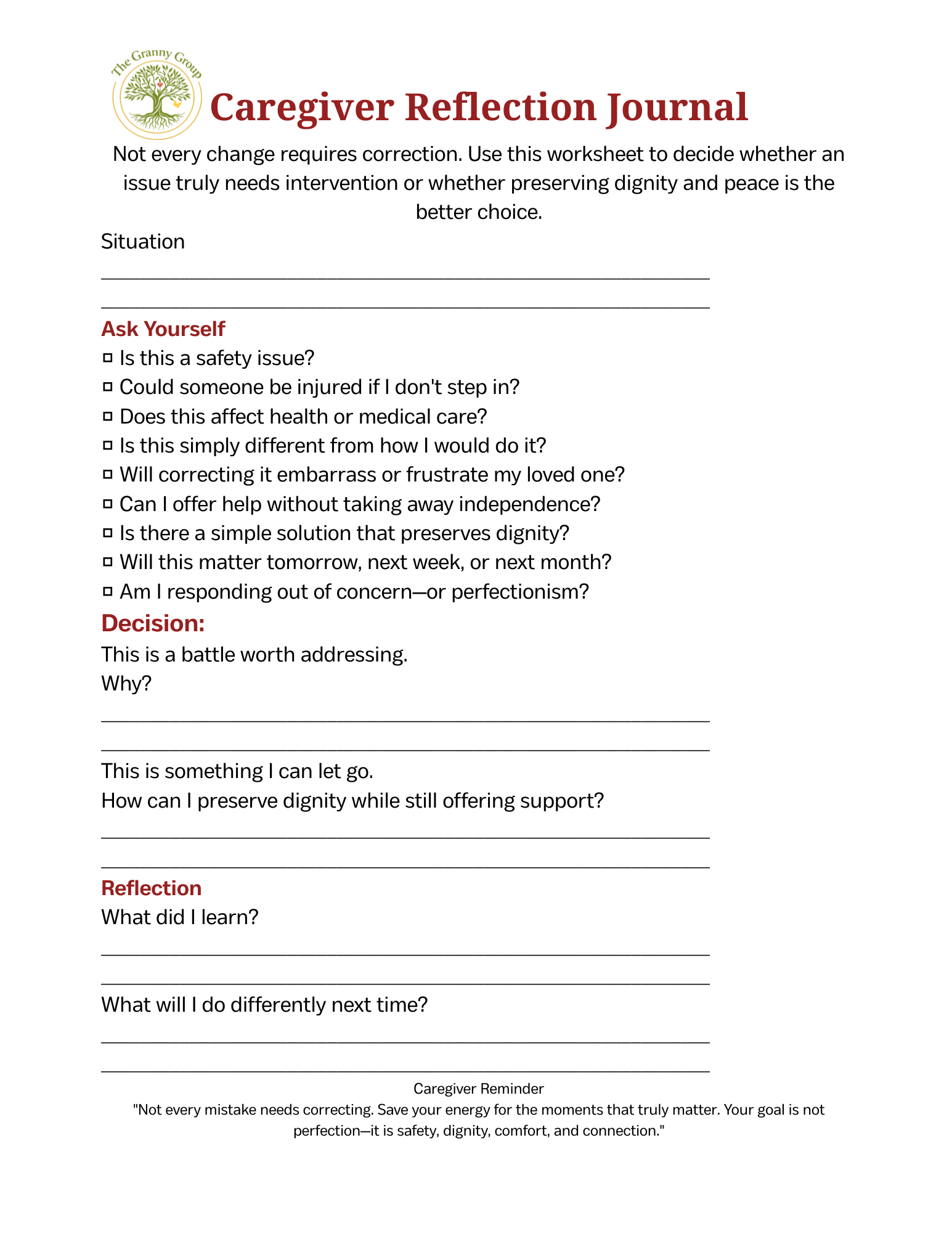
One lesson every caregiver eventually learns is that you have to start choosing your battles. As your loved one’s abilities continue to change, not every mistake needs to be corrected. Sometimes preserving their dignity becomes more important than being right.
My mom always wore a full face of beautiful, understated makeup. She had flawless skin, and even well into her 80s people would stop her to ask how she kept it looking so healthy and youthful. She never left the house without makeup—especially her eyebrows. They were simply part of who she was.
Little did we know that her eyebrows would remain important to her long after her ability to apply them correctly had faded. Until the very end, she knew she needed to put on her eyebrows before leaving the house. What she no longer remembered was which product in her makeup drawer was actually used for eyebrows.
One day she proudly appeared with bright pink eyebrows.
She had used her pink lip liner pencil to draw them on.
The first time it happened, we gently explained that she had picked up the wrong pencil. The second time, we did the same. But after that, we realized something important. If she was simply coming to our house for dinner, did it really matter?
If she had been going out in public, we would have quietly helped her fix them because we knew how much pride she had always taken in her appearance. Allowing her to leave the house looking different than she would have wanted would have felt disrespectful to the woman she had always been.
But at home, those bright pink eyebrows became one of the battles we chose not to fight. In the grand scheme of everything else she was navigating, correcting her makeup wasn’t important. Pointing it out only risked making her feel embarrassed or frustrated.
Caregiving teaches you that some things deserve your energy, while others simply don’t. As abilities decline, your priorities begin to shift. You learn to focus less on perfection and more on preserving comfort, confidence, dignity, and joy. Those are the moments that matter most.
If she had been going out in public, we would have discreetly helped her fix it because we knew how much pride she had always taken in her appearance. Allowing her to leave the house with makeup she wouldn’t have wanted would have felt disrespectful to the woman she had always been.
Over time, though, we stopped correcting the little mistakes she made at home. In the grand scheme of everything else she was facing, mismatched makeup simply wasn’t worth causing embarrassment or frustration. We learned to choose our battles and focus on what truly mattered—her comfort, her dignity, and the time we were still fortunate enough to spend together.
As a caregiver, your role will likely evolve over time. What begins as occasional help with grocery shopping or transportation may eventually include assistance with bathing, dressing, or mobility. Regularly reassessing your loved one’s abilities allows you to adjust the level of care while encouraging them to continue doing as much as they can safely accomplish on their own.
Caregiver Tip
Think of independence as a spectrum rather than an all-or-nothing concept. Even if your loved one needs help with some tasks, encourage them to continue performing the parts they can safely manage. Preserving independence whenever possible helps maintain strength, confidence, dignity, and quality of life while reducing the risk of unnecessary dependence.